

Vue d'ensemble
Objectif :
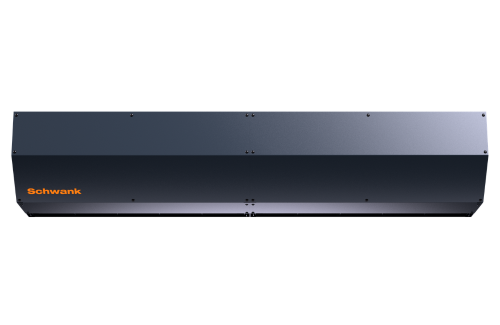
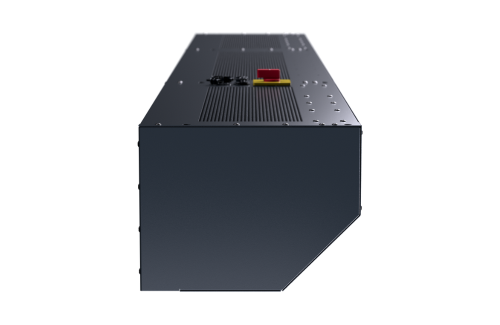
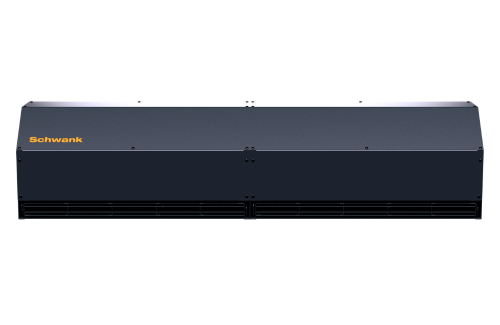
Développer et optimiser un système de ventilation pour le nouveau rideau d'air Epic12. La solution de ventilation doit permettre l'utilisation de plusieurs longueurs d'unité tout en assurant un équilibre entre le débit d'air, l'uniformité, la vitesse au sol, le rendement électrique, la charge du moteur et la fiabilité du produit.
Client:
Schwank
Application:
Rideau d'air Epic12 (nouveau modèle)
Le rôle de Revcor:
Partenaire technique pour le développement de systèmes de circulation d'air.
Défi
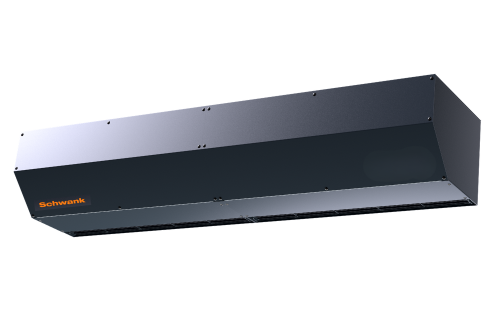
Schwank développait le rideau d'air Epic12 en tant que nouvelle plateforme industrielle conçue pour offrir des performances de circulation d'air fiables, une grande polyvalence d'utilisation et un excellent rapport qualité-prix pour une large gamme de portes industrielles en Amérique du Nord.
Pour accompagner cette évolution, Schwank avait besoin d'une solution de ventilation capable de fournir un débit d'air puissant et homogène, des performances électriques satisfaisantes et un niveau sonore adapté, quel que soit la longueur des unités.
Pour le modèle de 36 pouces, l'objectif était d'atteindre un débit d'air minimal de 1 500 CFM tout en maintenant la consommation électrique à 3,7 ampères ou moins à 208 V. Les premiers essais internes réalisés avec des échantillons de roues de ventilateur se sont rapprochés des objectifs requis, mais les performances en termes de débit d'air n'étaient pas optimales et les niveaux sonores étaient plus élevés que souhaité.
Pour finaliser la conception, Schwank s'est associé à l'équipe d'ingénieurs de REVCOR afin d'évaluer et d'optimiser les ventilateurs Epic12 dans le laboratoire de REVCOR, en utilisant les méthodes de l'AMCA. L'objectif était de mettre au point une solution qui :
- L'objectif de débit d'air requis a été atteint
- Je n'ai pas surchargé le moteur
- Les limites sonores admissibles n'ont pas été dépassées
- A contribué à la mise en place d'une approche de conception évolutive pour l'ensemble de la gamme de produits Epic12
Approche
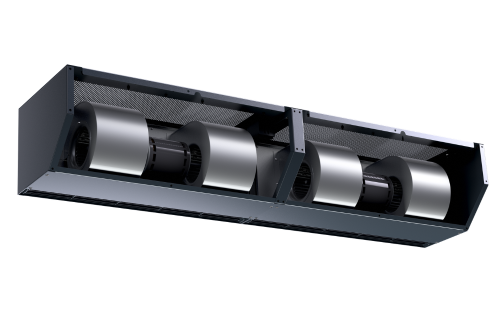
REVCOR’L'équipe d'ingénieurs de l'entreprise a mené une évaluation détaillée des performances aérodynamiques à l'aide de son banc d'essai afin de déterminer la configuration optimale de la roue et du carter du ventilateur pour la plateforme de rideaux d'air Epic12. Plutôt que de considérer le ventilateur comme un composant isolé, l'équipe a évalué la manière dont la roue, le carter, la charge du moteur et les conditions à l'entrée du rideau d'air interagissaient pour former un système complet.
Utilisation de Méthodes d'essai de l'AMCA, REVCOR a mesuré le débit d'air, la vitesse de l'air, l'uniformité, la pression et la puissance nominale du moteur sur plusieurs configurations de roues de ventilateur prototypes. Le dispositif de laboratoire a permis à l'équipe de tester et de comparer rapidement plusieurs diamètres de ventilateur, conceptions de roues et géométries de carter dans des conditions contrôlées, aidant ainsi les deux équipes à comprendre comment chaque modification de conception influait sur le débit d'air, le rendement, la charge du moteur et les performances acoustiques.
Au cours des essais, REVCOR a également constaté que la conception de l'entrée de l'unité pouvait être améliorée et optimisée afin de réduire les restrictions de débit d'air, confirmant ainsi que l'optimisation du débit d'air à l'échelle du système serait essentielle pour atteindre les objectifs de performance visés.
Cette approche axée sur les essais en laboratoire a fourni à Schwank des données de performance précises et a permis aux deux équipes de prendre des décisions de conception éclairées.
Travailler avec REVCOR nous a apporté le soutien technique dont nous avions besoin pour optimiser la circulation de l'air de notre tout nouveau rideau d'air industriel de la série Epic12. Grâce à leur collaboration, nous avons pu accélérer le processus, valider les performances et commercialiser une solution plus performante.
- Sami Aslam, Responsable produit « Circulation de l'air », Schwank
Résultats
REVCOR a mis au point une solution de ventilateur spécialement optimisée pour la plateforme de rideaux d'air Epic12 de Schwank, qui répond aux objectifs de performance du modèle 36 pouces, à savoir un débit supérieur à 1 500 CFM pour une consommation électrique inférieure à 3,7 A.
D'autres configurations de test ont montré qu'il était possible d'obtenir un débit d'air plus élevé, mais que cela nécessitait souvent une consommation électrique accrue. Cela a confirmé que la configuration de ventilateur choisie offrait le meilleur compromis global entre débit d'air, rendement électrique, charge du moteur et niveau sonore pour la conception de l'Epic12.
REVCOR a communiqué à Schwank des recommandations supplémentaires en matière de conception, susceptibles d'améliorer encore les performances de débit d'air tout en favorisant le développement à long terme de la plateforme Epic12.
Grâce à ce travail d'ingénierie collaboratif, Schwank a atteint son objectif de débit d'air pour l'Epic12 tout en conservant l'encombrement réduit et la consommation d'énergie optimisée requis pour cette plateforme.
De la configuration des flux d'air et l'assistance à la conception jusqu'à la production complète, REVCOR aide les équipementiers à transformer leurs objectifs en matière de flux d'air en solutions produits validées.
Prêt pour votre prochain projet ?
Nos ingénieurs concepteurs sont prêts à vous aider.